
This is one of the most common calls we get across East Setauket, Smithtown, Brookhaven, and the wider Suffolk County area, particularly after a heavier-than-usual storm season.
What typically causes recurring basement water intrusion?
Grading that slopes toward the house. If the ground immediately around the foundation slopes toward the house rather than away from it, even slightly, rainwater gets directed straight at the foundation walls instead of away from them. This is one of the most common and most overlooked causes, because it’s often not obvious just from looking.
Gutters and downspouts discharging too close to the foundation. A downspout that empties right next to the house effectively concentrates a large volume of roof water into one spot along the foundation, which is more than the soil there can typically handle, especially during a heavy storm.
A high water table. Parts of Suffolk County, particularly closer to the coast, have a naturally high water table. During periods of heavy or sustained rain, that water table can rise enough to reach the level of basement floors and walls, causing water to seep in through the slab or foundation joints, even without any obvious crack.
Cracks or gaps in the foundation. Hairline cracks that seem harmless when dry can allow water through under pressure during heavy rain. These are often found around window wells, at the cove joint where the floor meets the wall, or around utility penetrations.
A failing or absent sump pump system. If your home relies on a sump pump to manage groundwater and it’s not working properly, or wasn’t sized for the volume of water your property actually deals with, water that would normally be pumped out can back up during a heavy storm instead.
Window wells without proper drainage. Basement window wells that fill with water during heavy rain, rather than draining away, can eventually let that water seep in around the window frame.
How to narrow down which one applies to you
Pay attention to exactly where the water first appears during or after a storm. Water along one specific wall often points to grading or a downspout issue on that side of the house. Water coming up through the floor, particularly near the centre of the basement or around a floor drain, points more toward a high water table or hydrostatic pressure pushing up from below. Water appearing near a window well is usually exactly what it looks like: the well itself isn’t draining.
It’s also worth noting whether the water shows up during or right after the rain, versus a day or two later. Water that arrives quickly tends to be surface water finding a fast path in, such as poor grading or a downspout issue. A delay of a day or more can point toward groundwater or water table related intrusion, since that takes longer to build up.
What actually fixes recurring intrusion
The right fix depends entirely on the cause, which is why an accurate diagnosis matters more than jumping straight to a solution:
- Correcting the grading around the foundation so water is directed away from the house, sometimes combined with extending downspouts further from the foundation.
- Sealing cracks and joints in the foundation itself, using appropriate waterproofing materials suited to below-grade masonry.
- Installing or upgrading a sump pump system, sometimes with a backup pump, for properties where groundwater is a regular factor.
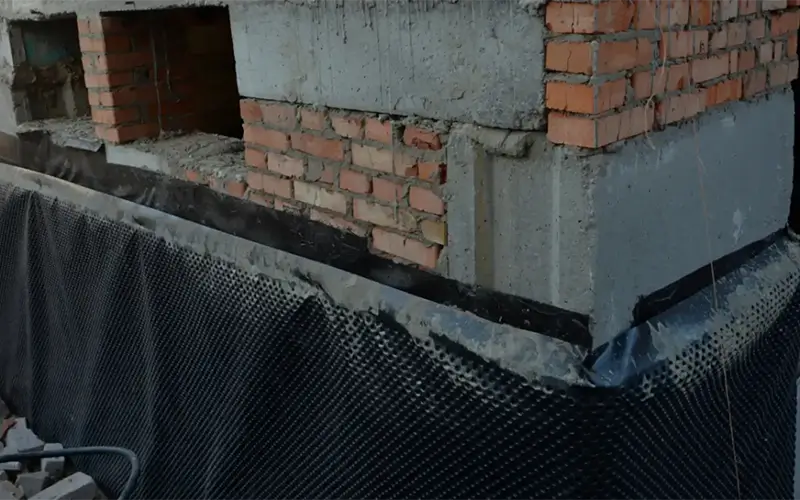
- Interior or exterior foundation waterproofing, which can range from a drainage system installed along the interior perimeter to a full exterior membrane and drainage solution, depending on the severity and cause.
- Window well covers or improved drainage for wells that are the specific source of the problem.
Local conditions across Suffolk County
Long Island’s water table varies significantly depending on proximity to the coast, with many areas along the South Shore and near Long Island Sound dealing with a naturally higher water table than more inland parts of Suffolk County. Combined with the intensity of nor’easters and summer storms that can drop a significant amount of rain in a short period, basements here face more pressure than they would in a drier, more inland climate. Older homes, in particular, were often built to standards that didn’t fully anticipate the level of rainfall intensity we see more regularly now.
Practical takeaways
If you’re dealing with recurring basement water, it’s worth tracking a few storms: where the water enters, how quickly it appears relative to the rain starting, and whether it correlates with storm intensity or duration. That pattern is genuinely useful information for anyone assessing the problem. It’s also worth checking, from outside, whether the ground slopes away from your foundation on all sides and where your downspouts actually discharge, since both are things you can often spot yourself before calling anyone.
When professional help makes sense
A small amount of moisture after an exceptionally heavy, prolonged storm isn’t necessarily cause for alarm on its own. But water that shows up reliably after ordinary rain, or that’s getting worse over successive seasons, is worth having properly diagnosed rather than mopped up and hoped away. Basement water intrusion tends to cause cumulative damage, to flooring, stored belongings, and potentially the foundation itself, so identifying and addressing the actual cause sooner rather than later usually saves money over time.
If water keeps finding its way into your basement, Shore 2 Shore can assess what’s actually driving it and explain the right level of fix for your specific situation.