
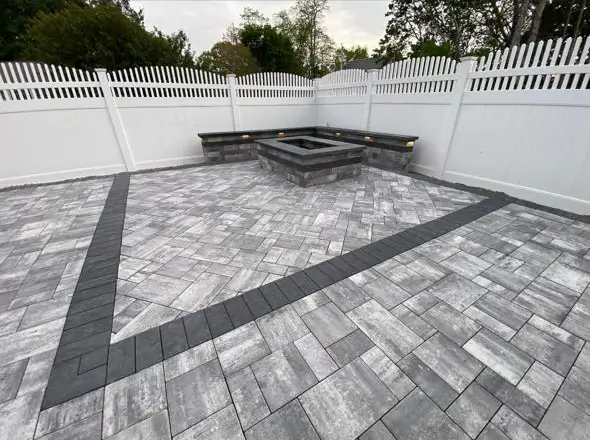
A thoughtfully designed patio can change how you use your entire backyard. It creates a comfortable place for morning coffee, family meals, summer barbecues and quiet evenings outside.
However, a good patio is more than an attractive arrangement of pavers or natural stone. It needs a stable base, sensible drainage, properly supported edges and a layout that works with your home and garden.
That is why choosing the right patio contractor in Suffolk County, NY, is an important part of the project. Long Island properties experience rain, freezing temperatures and seasonal ground movement—all of which can expose rushed or poorly prepared patio installations.
This guide covers the available materials, the installation process, common mistakes and the questions worth asking before hiring a contractor.
TL;DR
- A patio should be designed around how your family will actually use the space.
- Pavers offer flexibility, natural stone provides individual character and concrete creates a practical continuous surface.
- Excavation, base preparation, compaction and drainage are essential for long-term performance.
- The finished patio should direct water away from your home.
- Proper edge restraints help prevent pavers from spreading or moving.
- Compare written scopes of work, not just total prices.
- Shore 2 Shore provides professional patio installation services in Suffolk County using pavers, natural stone and concrete.
What Does a Patio Contractor Do?
A professional patio contractor should manage more than the placement of the visible surface. The contractor’s responsibilities may include:
- Inspecting and measuring the proposed area
- Discussing how the space will be used
- Helping select an appropriate material
- Planning the patio shape and finished elevation
- Removing grass, soil or an existing surface
- Preparing and compacting the base
- Establishing the correct drainage slope
- Installing pavers, stone or concrete
- Supporting the edges
- Creating safe transitions to doors and walkways
- Completing joints and final detailing
- Removing construction waste
- Explaining initial care and maintenance
The most important parts of the installation are not always visible after the patio is complete. A well-laid surface can still develop movement, low spots or loose edges when the preparation underneath it is inadequate.
Why Local Patio Experience Matters in Suffolk County
A patio is continuously exposed to the weather. Rainwater can enter weak joints or collect in depressions, while freezing and thawing can worsen movement in an unstable surface.
An experienced Suffolk County patio contractor should consider:
- Existing soil and ground stability
- Natural water movement across the property
- The distance between the patio and the foundation
- Finished heights near exterior doors
- Connections to walkways, driveways and steps
- Shade, sunlight and surrounding trees
- Expected furniture and foot traffic
- Long Island’s seasonal weather conditions
Shore 2 Shore Stonework & Asphalt is based in East Setauket and serves homeowners across Suffolk County. Its paving and masonry services are planned with attention to base preparation, drainage, landscape integration and local conditions.
Start With How You Want to Use the Patio
Before selecting a colour or paving pattern, think about what you want the completed area to do.
A small seating patio has very different requirements from an outdoor entertaining area designed to hold a dining table, barbecue, fire feature and several guests.
Consider questions such as:
- How many people will normally use the patio?
- Will it hold dining furniture or lounge seating?
- Do you need room for a barbecue?
- Will children regularly use the space?
- Does it need to connect to a garden or pool area?
- Where will people enter and leave?
- Will you add an outdoor kitchen later?
- Do you need space for planters or lighting?
- How much maintenance are you comfortable with?
A human-centred design begins with real daily use—not simply with what looks attractive in a sample photograph.
Choosing the Right Patio Material
There is no single best patio material for every Suffolk County property. Each option has different advantages, maintenance needs and visual qualities.
Paver patios
Concrete pavers are popular because they are available in numerous colours, shapes, textures and patterns. They can work with traditional, contemporary and rustic properties.
Potential advantages include:
- Extensive design flexibility
- Decorative borders and contrasting patterns
- Replacement of individual damaged pavers
- Defined transitions between different outdoor areas
- Compatibility with curved or irregular layouts
Paver patios depend on a properly compacted base and secure edge restraints. Without these elements, the pavers may spread, dip or move apart.
Joint maintenance may also be required over time, particularly if sand is disturbed by water, cleaning or weeds.
Natural stone patios
Natural stone provides texture and variation that manufactured materials cannot fully reproduce. Each piece has its own colour, shape and surface character.
It can be suitable for:
- Traditional homes
- Garden-style patios
- Informal or organic layouts
- Feature areas
- Properties with existing stonework
Because natural stone can vary in thickness, an experienced installer needs to prepare and adjust the bedding carefully. Surface texture and slip resistance should also be considered, particularly around frequently wet areas.
Concrete patios
Concrete provides a continuous, practical surface and can be finished in several ways. Depending on the design, it may be brushed, textured or given a decorative treatment.
Concrete patios can offer:
- A clean and consistent surface
- Suitability for regular outdoor use
- Different textures and finish options
- Lower joint maintenance than some unit paving
- A straightforward contemporary appearance
Correct base preparation, reinforcement where appropriate, joint placement and curing are vital. Concrete should not simply be poured over unprepared or unstable ground.
Shore 2 Shore also provides dedicated concrete paving services for outdoor surfaces in Suffolk County.
Patio contractor’s insight: The best material is not necessarily the most expensive option. It is the material that fits your property, planned use, maintenance expectations and budget—and is installed on a properly prepared foundation.
What Professional Patio Installation Services Should Include
Although each property is different, a reliable installation usually follows a clear process.
- On-site consultation
The contractor should visit the property and inspect the proposed patio location. This is the time to discuss size, shape, materials, access, drainage and how the finished space will be used.
Be open about your priorities. For example, tell the contractor if you want enough space to walk behind dining chairs or intend to add a barbecue island later.
- Layout and measurements
The planned shape should be marked so you can visualise it within the garden. This helps identify whether the area feels too small, interferes with access or needs to connect differently with the house.
The design should also consider:
- Exterior doors
- Steps and landings
- Downspouts
- Existing drains
- Walkways
- Trees and planting
- Property boundaries
- Utilities
- Excavation
Grass, topsoil, old paving and unsuitable material may need to be removed. The excavation depth depends on the chosen patio material, site conditions and base design.
A patio should not be placed directly over soft, organic or unstable ground.
- Base preparation
The base supports the completed patio and distributes the load placed on it. The material should be installed and compacted using methods appropriate to the site and patio type.
Insufficient base preparation may contribute to:
- Sinking pavers
- Uneven areas
- Movement between units
- Cracking
- Water collection
- Unstable furniture
Ask the patio contractor to explain what base material will be used and how it will be compacted.
- Drainage and grading
A patio normally requires a subtle slope so rainwater can move towards an appropriate drainage area. It should not trap water or direct runoff towards the house.
A responsible contractor should be able to explain:
- Which way water will move
- How the patio relates to existing ground levels
- Whether downspouts will affect the area
- How water will be kept away from the foundation
- Whether an additional drainage solution is required
- Surface installation
The selected pavers, natural stone or concrete should be installed with careful attention to levels, alignment and the intended pattern.
Paver and stone installation may also involve:
- Bedding material
- Cutting around edges
- Pattern alignment
- Border installation
- Edge restraints
- Joint filling
- Final compaction where appropriate
- Finishing and inspection
The contractor should check the finished levels, edges, joints and transitions. Construction waste should be removed, and you should receive clear instructions about when the patio can be used.
How Large Should a Patio Be?
Patio size should be determined by the activities and furniture it needs to accommodate.
A compact patio may work for two chairs and a small table, but a family dining space requires room for the table, chairs and movement around them. A barbecue or outdoor kitchen also needs safe working space.
A practical approach is to place or mark the furniture dimensions on the ground before finalising the design. Leave room for people to:
- Pull chairs away from the table
- Walk between seating areas
- Reach exterior doors
- Move food between the house and barbecue
- Access the garden without cutting through furniture
- Use steps and pathways safely
It is usually easier to adjust the marked layout before excavation than to realise afterwards that the completed area feels cramped.
Patio Features Worth Planning Early
Some additions are difficult or expensive to incorporate after the patio has been completed. Discuss possible future features before work begins.
These may include:
- Outdoor lighting
- Electrical outlets
- Gas connections
- Water lines
- Outdoor kitchens
- Fire features
- Built-in seating
- Pergolas
- Drainage channels
- Planter beds
- Connecting walkways
Even if you do not install every feature immediately, early planning can reduce the need to disturb the finished patio later.
Common Patio Installation Mistakes
Choosing appearance over suitability
A material may look beautiful in a showroom but perform poorly in a particular location. Consider exposure, foot traffic, furniture and maintenance as well as appearance.
Making the patio too small
Homeowners sometimes measure only the furniture and forget the space needed to move around it.
Ignoring water movement
Poor drainage can lead to puddles, staining, settlement and water travelling towards the foundation.
Using an inadequate base
A decorative surface cannot compensate for weak preparation underneath it.
Forgetting edge support
Paver patios can gradually spread or lose alignment when their perimeter is not properly restrained.
Overlooking transitions
Awkward connections with doors, steps or walkways can affect safety and make the completed project feel unfinished.
Selecting a contractor by price alone
A noticeably lower estimate may omit excavation, base depth, drainage work, waste removal or important finishing details.
Questions to Ask a Patio Contractor
Before accepting an estimate, ask:
- What patio material do you recommend for this property?
- How much excavation is included?
- What base material will be used?
- How will the base be compacted?
- Which way will water drain?
- How will the patio connect to the house and walkways?
- Are edge restraints and joint materials included?
- Will existing materials be removed and disposed of?
- Who is responsible for checking permit requirements?
- How long should installation take?
- When can the completed patio be used?
- What maintenance will the surface require?
- What could cause the price to change?
- Can I see examples of similar installations?
- Will the complete scope be supplied in writing?
You can review Shore 2 Shore’s project gallery for examples of patio, walkway, driveway and masonry projects.
How to Compare Patio Estimates Fairly
Do not compare only the total at the bottom of each estimate. Check whether each contractor has allowed for the same work.
A written patio estimate should ideally identify:
- Approximate patio dimensions
- Selected material or product
- Excavation and removal
- Base preparation
- Bedding materials
- Drainage or grading work
- Edge restraints
- Borders and patterns
- Steps or walkway connections
- Joint finishing
- Waste disposal
- Expected schedule
- Payment arrangements
- Exclusions and possible additional work
Two estimates may both say “install a paver patio” while covering very different levels of preparation.
Why Consider Shore 2 Shore as Your Patio Contractor?
Shore 2 Shore Stonework & Asphalt provides custom patio installation from its East Setauket base across Suffolk County and Long Island.
Its patio and masonry services include:
- Paver patios
- Natural stone patios
- Concrete patios
- Outdoor living surfaces
- Connecting walkways
- Stoops and steps
- Retaining walls
- Concrete paving
- Related masonry work
The company’s published process emphasises property-specific planning, base preparation, drainage, precision installation and materials suitable for Long Island conditions. Homeowners can review completed work and request an on-site estimate before deciding on a solution. Learn more about Shore 2 Shore’s patio installation services.
Frequently Asked Questions
How long does patio installation take?
A straightforward residential patio may take several days, while a larger or more detailed design can take longer. Excavation, site access, weather, material choice and additional features can all affect the schedule.
What is the best patio material for Suffolk County?
Pavers, natural stone and concrete can all be suitable when correctly installed. The best choice depends on your preferred appearance, budget, expected use and maintenance requirements.
Can a patio be installed over an existing concrete slab?
Sometimes, but only if the existing slab is stable, suitably positioned and able to support the proposed system. Cracking, movement or drainage problems should be investigated before covering it.
Why are my patio pavers sinking?
Common causes include inadequate base preparation, poor compaction, drainage problems, failed edges or disturbance beneath the surface.
Can individual patio pavers be replaced?
Yes. One advantage of pavers is that individual damaged or stained units can often be removed and replaced. The underlying cause should also be corrected if the paver has moved or sunk.
Does a patio need drainage?
Every patio needs a plan for rainwater. This may involve surface grading, existing drainage routes or an additional drainage system, depending on the property.
Will weeds grow through patio pavers?
Most weeds establish in material that accumulates within the joints rather than growing from deep underneath the patio. Correct installation and routine joint maintenance can help limit growth.
Does Shore 2 Shore provide patio installation near me?
Shore 2 Shore serves East Setauket, Smithtown, Brookhaven, Ronkonkoma, Centereach, Patchogue, Medford, Sayville, Huntington, Islip and other Suffolk County communities.
Request a Patio Installation Estimate
A successful patio should feel like a natural extension of your home. It needs enough space for everyday life, a material that suits the property and careful construction beneath the finished surface.
Contact Shore 2 Shore Stonework & Asphalt for professional patio installation services in Suffolk County, NY, or call (516) 989-6545 to request a free estimate.