
Article
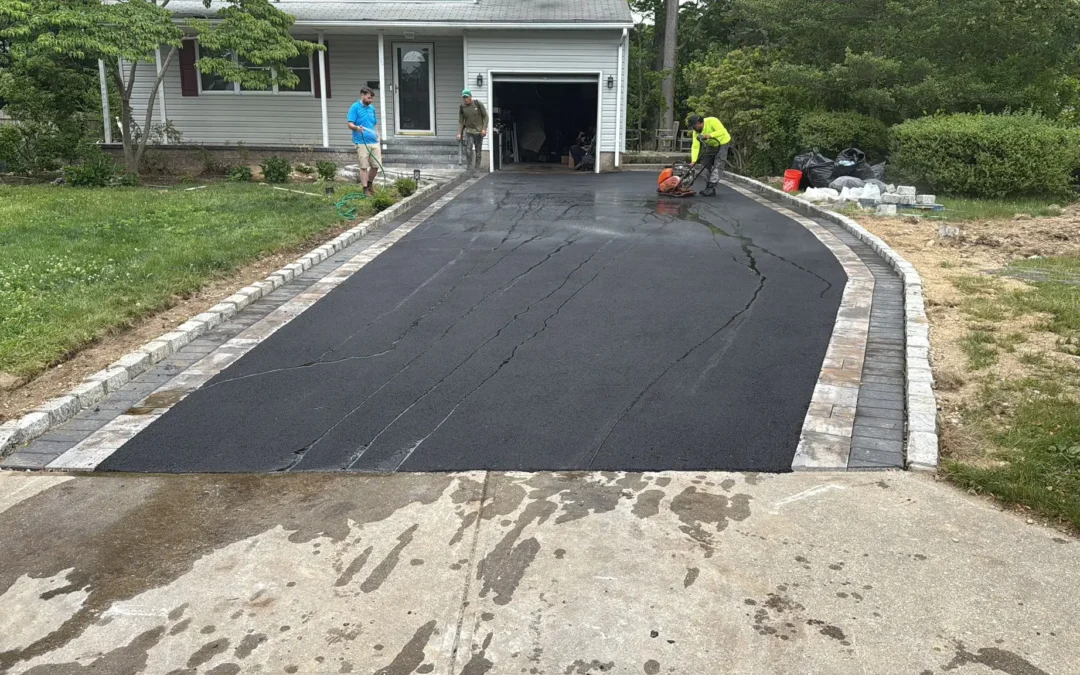
A freshly paved asphalt driveway looks finished the day the crew leaves. It isn’t, quite.
Asphalt keeps curing for months after installation. During that time it’s softer and easier to mark than it will be later. Most of the damage we see on newer driveways (tire scuffs, kickstand holes, ruts where a car always parks) happens in that first year, and nearly all of it is avoidable.
Here’s a simple timeline to follow. One rule overrides everything below: if your installer gives you different instructions, follow theirs, because they know the mix and conditions on your job.
Why new asphalt needs care
Asphalt is a mix of stone and a petroleum-based binder. When it’s laid hot and compacted, it’s firm enough to use, but the binder continues to harden for months. Homeowner guides such as Hunker’s overview of cure times puts full curing at roughly six to twelve months, depending on weather.
Heat matters. On a hot July afternoon, new asphalt is noticeably softer than on a cool October morning.
Day 1: Hands (and feet) off
- Keep vehicles off completely.
- Foot traffic is generally fine after the first day, but keep kids’ bikes and toys off.
- Leave any barriers or tape your crew sets up in place.
Days 2 to 5: Wait before driving
Most guidance recommends keeping cars off for several days. Hunker suggests three to five days; your contractor may say longer in hot weather.
When you do start driving on it, go slowly and drive straight in and out where you can.
First week: Keep heavy loads away
- No trucks, RVs, trailers, dumpsters or moving vans.
- No delivery pallets or stacked materials.
- If something heavy has to sit on the driveway, put a sheet of plywood under it to spread the load.
First month: Change your parking habits
This is where most avoidable damage happens.
- Don’t turn your wheels while the car is stopped. “Power steering” turns twist the tires into soft asphalt and leave scuff marks. Keep the car rolling, even slowly, while you turn.
- Vary where you park. Parking in exactly the same spot every day can leave dips where the tires rest.
- No kickstands or jack stands. Motorcycles, bikes and car jacks concentrate weight on a tiny point and leave holes. Use a board under them.
- Watch the edges. Driveway edges are the weakest part of new asphalt. Avoid driving or parking along them.
First summer: Respect the heat
On very hot days, new asphalt softens. If you can, park on the street or in the garage during heat waves, and avoid sharp turns on the surface. Some installers recommend hosing the driveway down on hot afternoons to cool it; ask yours.
First fall and winter
- Use a plastic shovel or set the plow blade slightly high to avoid gouging the surface.
- Avoid piling salt-heavy snow in one spot for long periods.
- Keep soil or sod built up against the driveway edges so they’re supported.
Months 6 to 12: When to sealcoat
Sealcoating protects asphalt from water, oil and sun, but timing matters with a new driveway. Sealing too early can trap the oils that need to escape as the asphalt cures.
Guidance varies. Angi recommends waiting at least 30 days and ideally until the asphalt has fully cured, which it describes as six months to a year. Many local pavers prefer to let a new driveway go through its first winter before the first coat.
In practice, for most Long Island driveways, plan your first sealcoat for the following year and confirm timing with your installer.
Quick reference
| When | Do | Avoid |
| Day 1 | Keep vehicles off | Bikes, toys, barriers moved |
| Days 2 to 5 | Wait before driving | Driving on it early |
| Week 1 | Drive slowly and straight | Heavy trucks, trailers, dumpsters |
| Month 1 | Vary parking spots | Turning wheels while stopped, kickstands |
| First summer | Use boards under loads | Sharp turns in heat waves |
| Months 6 to 12 | Plan first sealcoat | Sealing too early |
What’s normal (and what isn’t)
A new driveway may look slightly uneven in texture, show small surface marks, or have a mild smell for a few days. That’s usually normal.
Call your installer if you see standing water that doesn’t drain, cracks, crumbling edges, or soft spots that sink when you walk on them.
Planning a new driveway?
Shore 2 Shore Stonework & Asphalt installs asphalt driveways across East Setauket and Suffolk County, and every job comes with clear care instructions for your first year. If you’re still comparing options, read our guide to choosing driveway contractors in East Setauket, or see all our driveway services. For existing surfaces, we also handle driveway repairs.
Get a free estimate for your driveway project.
FAQs
Can it rain on a new asphalt driveway?
Light rain after the asphalt has cooled and been compacted is usually fine. Your installer should avoid paving during heavy rain.
Why are there tire marks on my new driveway?
Usually from turning the steering wheel while the car is stopped, or sharp turns on hot days. Most light scuffs fade as the asphalt cures and weathers.